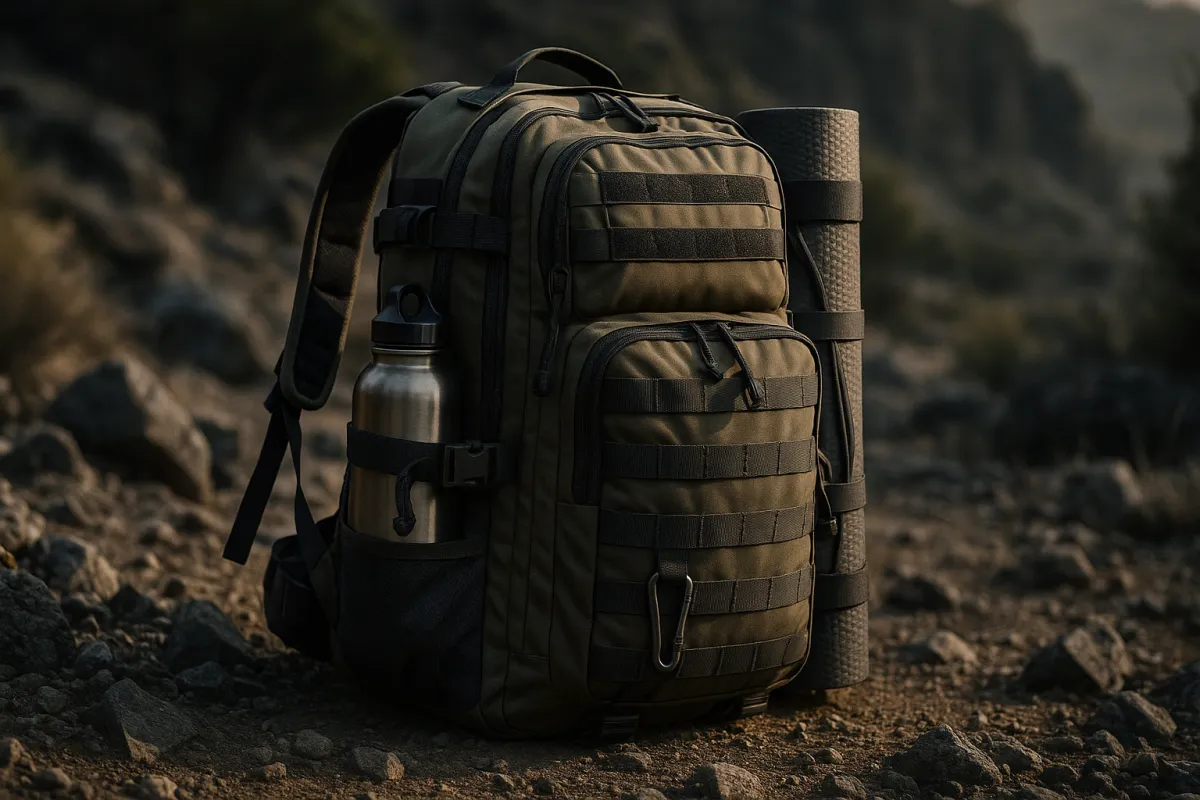
How to Pack a Bug Out Bag: The Room-by-Room System
How to Pack a Bug Out Bag: The Room-by-Room System
Most bug out bag guides hand you a list and call it done. The problem is a list doesn't tell you how to think — and when an emergency evacuation is happening in real time, you need a system, not just a checklist.
The room-by-room packing system changes that. Instead of staring at a generic gear list, you walk through your home one room at a time and systematically identify what needs to come with you, what should already be pre-packed in your bag, and what can be grabbed in the final 60 seconds before you walk out the door. It's practical, memorable, and built for real emergencies — not just theoretical ones.
In this guide, we'll walk you through the entire process: choosing the right bag, building your core load, and using the room-by-room method to make sure nothing critical gets left behind. If you haven't yet chosen your bag, check out our breakdown of the best bug out bags of 2026 before you start packing. And if you're building your broader home emergency system at the same time, our 72-hour emergency kit guide covers the home-based supplies that complement your bug out bag.
What is a Bug Out Bag — and When Do You Use It?
A bug out bag (BOB) is a pre-packed emergency backpack containing the essential gear and supplies to sustain you for 72 hours away from home. It's designed for evacuation scenarios — wildfires, flooding, civil unrest, chemical spills, or any situation that requires you to leave your home quickly and stay mobile.
The 72-hour time frame is intentional. In most disaster scenarios, emergency services restore basic infrastructure within three days. Your bug out bag bridges the gap between when disaster strikes and when organized relief becomes available. It's not a long-term survival system — it's a short-term lifeline.
Think of it as the portable, mobile version of your home emergency preparedness kit. One stays at home. The other leaves with you.
Choosing the Right Bug Out Bag
Before you pack a single item, you need a bag that can carry the load. A bug out bag should meet these criteria:
Capacity: 30 to 50 liters for most adults. Enough to carry 72 hours of supplies without being so large it becomes unmanageable.
Frame: An internal frame with padded shoulder straps and a hip belt is essential — you may need to carry this bag for hours.
Durability: Look for 500D to 1000D nylon or Cordura construction. Seams should be reinforced and zippers should be YKK or equivalent quality.
Organization: Multiple compartments allow you to organize gear by category and access what you need without unpacking everything.
Low profile: Avoid bright colors in emergency scenarios. Olive drab, coyote tan, gray, or black are appropriate.

The Room-by-Room Packing System
Here's the core of this guide. Walk through your home one room at a time. Some items should live permanently in your bag — pre-packed and ready. Others are grab items that get added in the final moments before you leave. We'll distinguish between the two.
The Kitchen — Water, Food & Medications
Your kitchen is the most critical room for bug out bag supplies. Start here.
Pre-Packed in Your Bag
Water filtration: A quality water filter straw or squeeze filter lets you draw safe drinking water from almost any source. Don't rely on bottled water alone — it's heavy and finite. Check Price on Amazon Here
Water storage: A collapsible 2-liter water bladder or hard-sided 32oz bottle. Fill it before you leave if time allows.
Emergency food bars: High-calorie emergency ration bars are compact, have a 5-year shelf life, and require no cooking. Pack enough for 2,000+ calories per day for 72 hours. Check Price on Amazon Here
Lightweight stove and fuel: A compact backpacking stove with a small fuel canister allows you to cook real food and boil water for purification. Check Price on Amazon Here
Grab Items (Last 60 Seconds)
Any prescription medications — keep a 3-day supply in a small zip-lock in your bag at all times if possible.
A few shelf-stable snacks if you have a moment to add them.
The Bedroom — Shelter, Clothing & Valuables
Pre-Packed in Your Bag
Emergency mylar blankets (2–3): Compact, lightweight, and capable of retaining 90% of body heat. Invaluable if you're caught outdoors overnight. Check Price on Amazon
Rain poncho: A packable poncho takes up almost no space and can be the difference between miserable and manageable in wet conditions.
Change of clothes: A set of moisture-wicking base layers rolled tight into a compression sack — socks and underwear especially.
Work gloves: Protects hands during debris clearing, building improvised shelter, or carrying heavy loads.
Grab Items
Cash in small bills — ATMs and card readers won't work if power is out.
A backup phone charger or power bank if not already packed.
Any irreplaceable jewelry or small valuables.
The Bathroom — Hygiene & First Aid
Pre-Packed in Your Bag
Compact first aid kit: At minimum: bandages, gauze, medical tape, antiseptic wipes, antibiotic ointment, pain relievers, and blister treatment. A tourniquet and hemostatic gauze should also be included — see our guide on how to use a tourniquet for proper technique. Check Price on Amazon
Hygiene basics: Travel-size soap, toothbrush, toothpaste, and a small pack of unscented wet wipes. Sanitation becomes critical after 24 hours.
Sunscreen and insect repellent: In warm-weather scenarios or outdoor displacement, both are essential.
Grab Items
Any over-the-counter medications you use regularly.
Prescription eyeglasses or contacts and solution.
The Living Room — Navigation, Communication & Documents
Pre-Packed in Your Bag
Hand-crank emergency radio: Lets you receive emergency broadcasts without batteries or cell service. Some models include a solar panel and USB charging port. Check Price on Amazon
Compass and paper maps: GPS devices fail. Phones die. A baseplate compass and laminated regional maps of your area never need charging. Check Price on Amazon
Paracord (50–100 feet): One of the most versatile survival items you can pack — shelter construction, clothesline, improvised repair, and dozens of other uses. Check Price on Amazon
Waterproof document pouch: Contains copies of your ID, insurance cards, passports, birth certificates, and a list of emergency contacts.
Grab Items
Grab folder with original documents if time allows.
Any external hard drives with irreplaceable data.

The Garage — Tools, Fire & Light
Pre-Packed in Your Bag
Multi-tool: A quality multi-tool covers dozens of tasks — cutting, gripping, screwing, opening, and more. One of the most used items in any emergency kit. See our guide to the best multitools for everyday carry for top picks. Check Price on Amazon
Fire starting kit: A ferrocerium rod, waterproof matches, and a lighter — all three. Fire provides warmth, water purification, signaling, and psychological stability in an emergency.
Tactical flashlight: A compact, high-lumen flashlight is essential for navigating in darkness. Check our guide to the best EDC flashlights for recommendations that fit a bug out bag perfectly.
Duct tape (small roll): The universal fix for everything from gear repair to improvised shelter sealing.
Work knife: A fixed-blade or sturdy folding knife for food prep, cutting cordage, and general utility. Our guide to the best EDC knives includes options suited for bug out use.
Grab Items
Fuel stabilizer and a small gas can if bugging out by vehicle.
Any additional tools relevant to your specific situation or destination.
Weight Management: The 20% Rule
A bug out bag you can't carry is useless. The general guideline is to keep your loaded bag at or under 20% of your body weight for sustained carry. For a 180-pound adult, that's 36 pounds maximum — ideally less.
Weigh your packed bag. If you're over your target:
Audit your food — emergency bars are more calorie-dense per ounce than most alternatives.
Swap duplicate items — you don't need three types of fire starters.
Downsize containers — refill small bottles from large ones rather than packing full-size products.
Cut clothing — one change, not three.
For more on what really matters in a survival loadout, check out our list of essential survival tools everyone should own and our outdoor survival essentials guide.
Maintain and Rotate Your Bug Out Bag
A bug out bag is only reliable if it's maintained. Build these habits:
Every 6 months: Check and replace any food or water that has expired. Inspect batteries, test electronics, and re-evaluate your gear based on current needs or season changes.
Every year: Do a full gear audit. Rotate clothing for seasonal appropriateness. Update your document copies.
After any use: Restock anything consumed immediately. Don't let your bag sit depleted.
Your bug out bag is a system, not a one-time purchase. Treat it accordingly. Pair it with a strong car emergency kit and a solid home power outage plan to build a complete preparedness ecosystem around it.
Final Thoughts
A bug out bag built on a room-by-room system is one that actually gets used — because you understand exactly what's in it, where it is, and why. You're not just carrying a generic gear list. You're carrying a system you built with intention.
Start with the right bag, pack your core load, and then walk your home room by room to make sure nothing critical gets missed. Review it twice a year and update it as your life changes. And when it's time to actually leave, your bag is ready — because you already are.
For a full look at the bag itself, visit our best bug out bags of 2026 guide. For the home-based supplies that complete the system, check out our 72-hour emergency kit guide and our beginner emergency preparedness kit. Preparedness isn't built in a single day — but it starts with a single decision to begin.