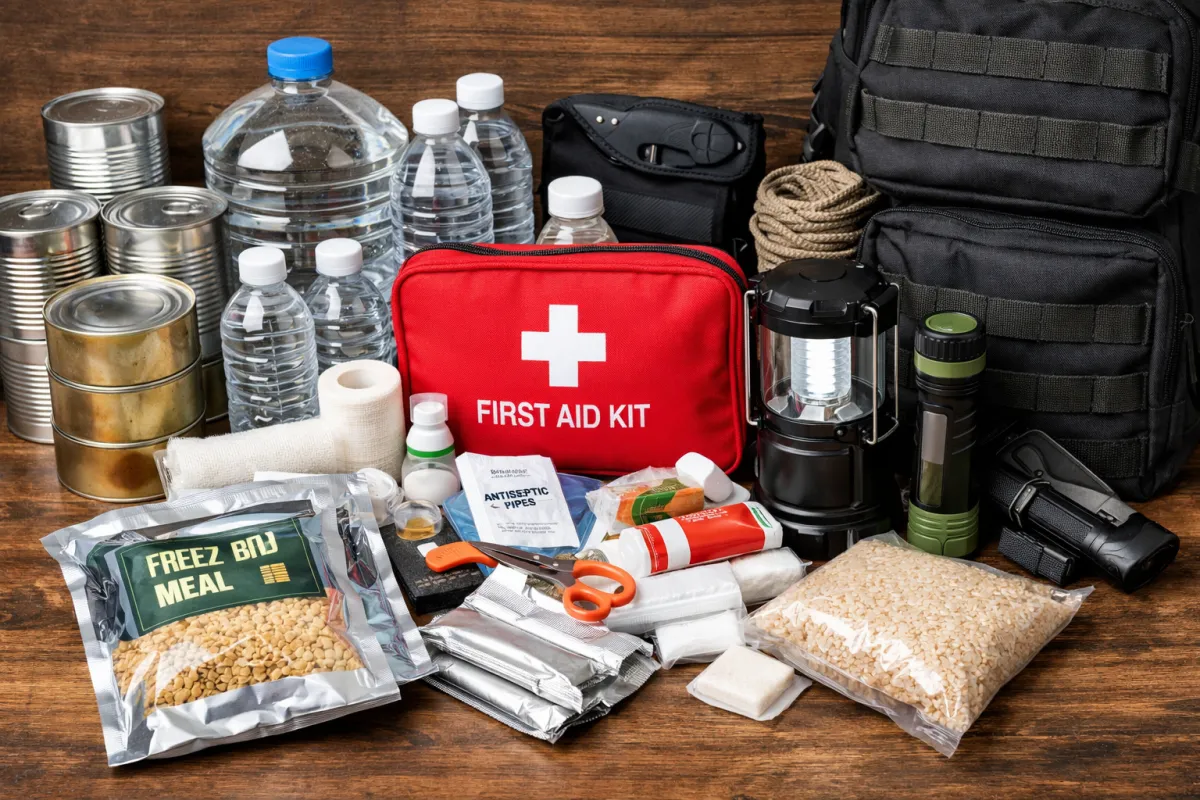
Beginner Emergency Preparedness Kit: The Essential Supplies Every Family Needs
Beginner Emergency Preparedness Kit: The Essential Supplies Every Family Needs
This post may contain affiliate links. If you purchase through these links, Freedom Gear Co may earn a small commission at no extra cost to you.
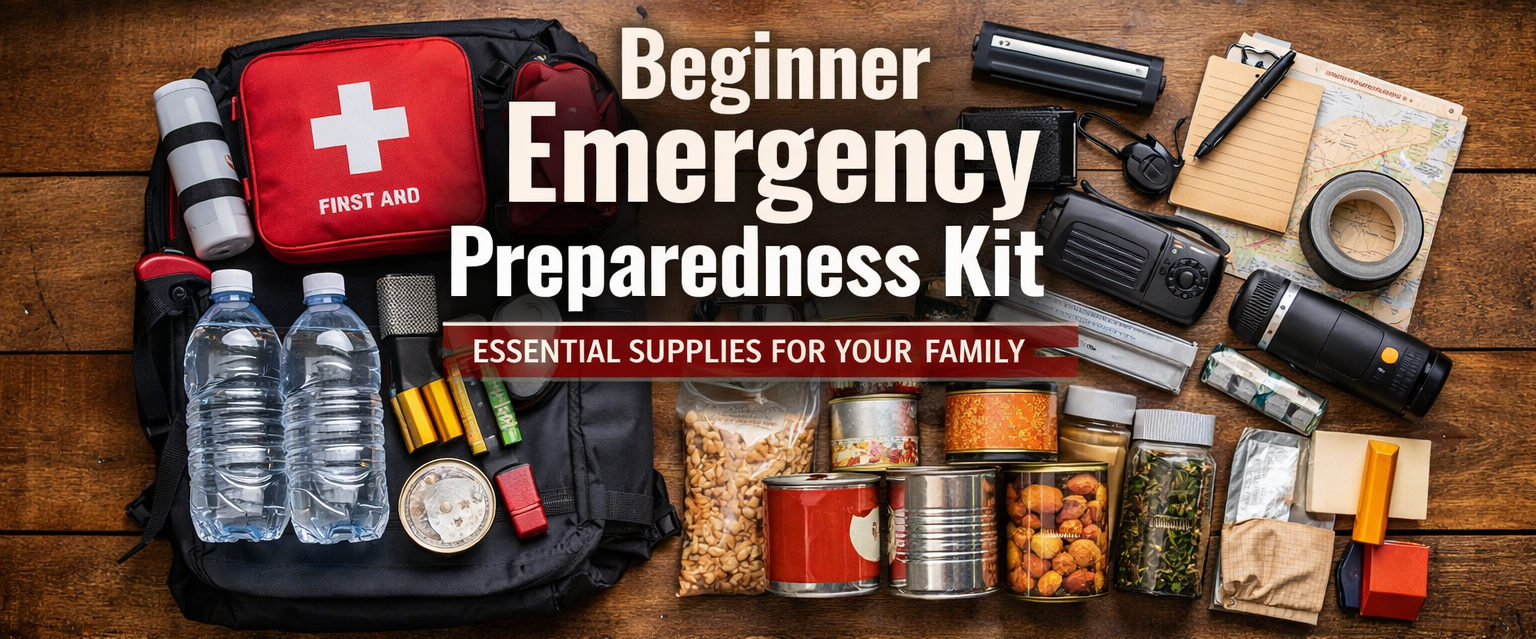
Emergencies rarely come with warning. Severe storms, power outages, and supply disruptions can happen at any time. Having a beginner emergency preparedness kit ready can make the difference between panic and confidence.
Preparedness isn’t about fear—it’s about responsibility.
A well-prepared kit ensures your family has the essentials needed to stay safe until help arrives or services return.
Why Every Household Needs an Emergency Preparedness Kit
Many emergencies cause disruptions to power, transportation, and supply chains. Grocery stores can run out of supplies within hours.
A preparedness kit helps you:
Maintain access to food and water
Stay safe during power outages
Handle minor medical emergencies
Communicate when systems fail
Even a simple 3-day emergency kit dramatically improves your ability to handle difficult situations.
Basic Emergency Preparedness Kit Checklist
Below are the essential supplies every beginner kit should include.
Water Supply
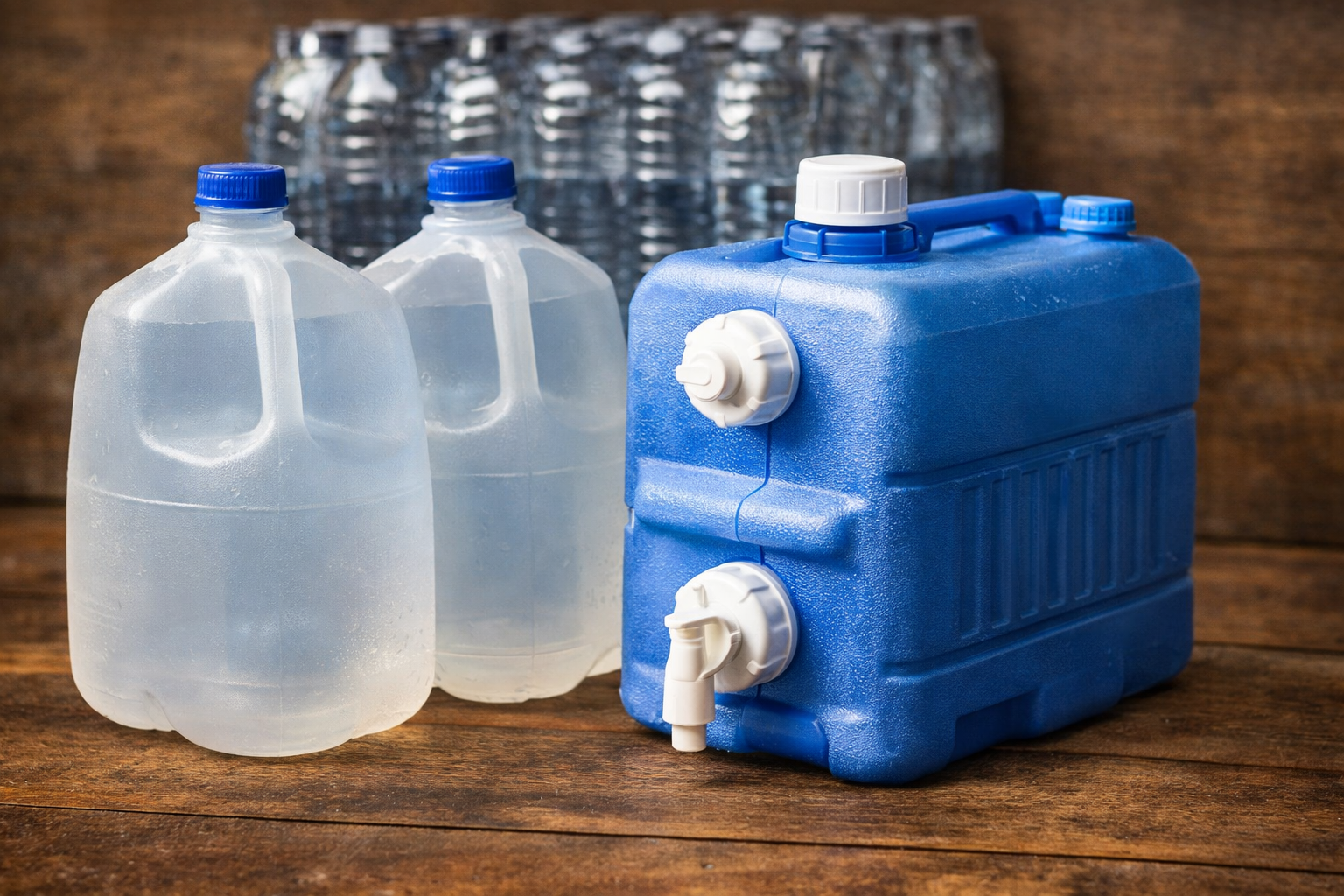
Water is the most critical resource during emergencies.
Experts recommend storing at least one gallon of water per person per day.
A basic supply should last a minimum of three days, though two weeks is even better.
Water storage tips:
Use food-grade containers
Store in a cool, dark place
Rotate every six months
Recommended options:
Emergency Food
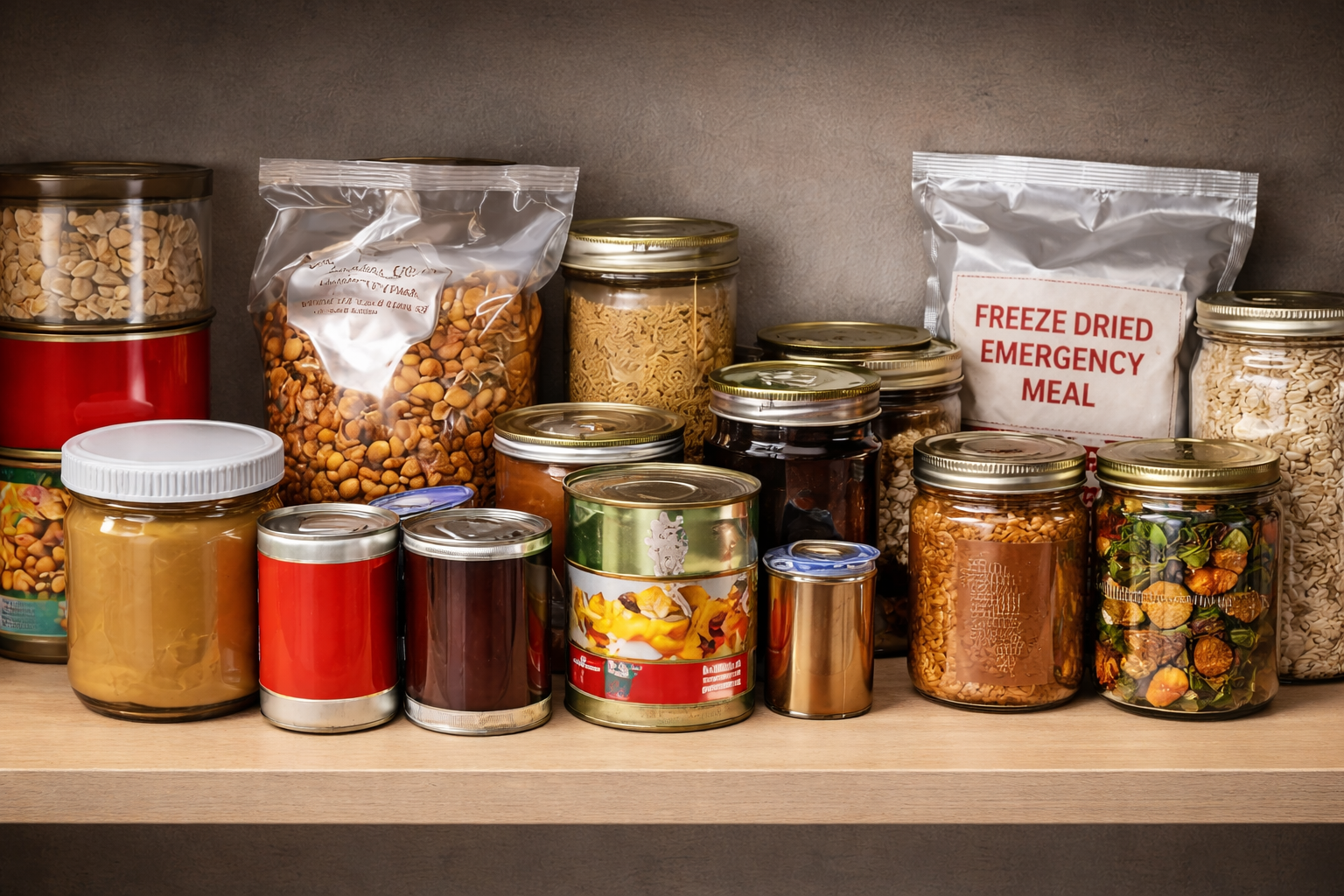
Your emergency kit should include non-perishable foods that require little preparation.
Good options include:
Canned foods
Protein bars
Peanut butter
Rice and beans
Freeze-dried meals
Choose foods with long shelf lives and high calorie content.
Recommended options:
Lighting and Power
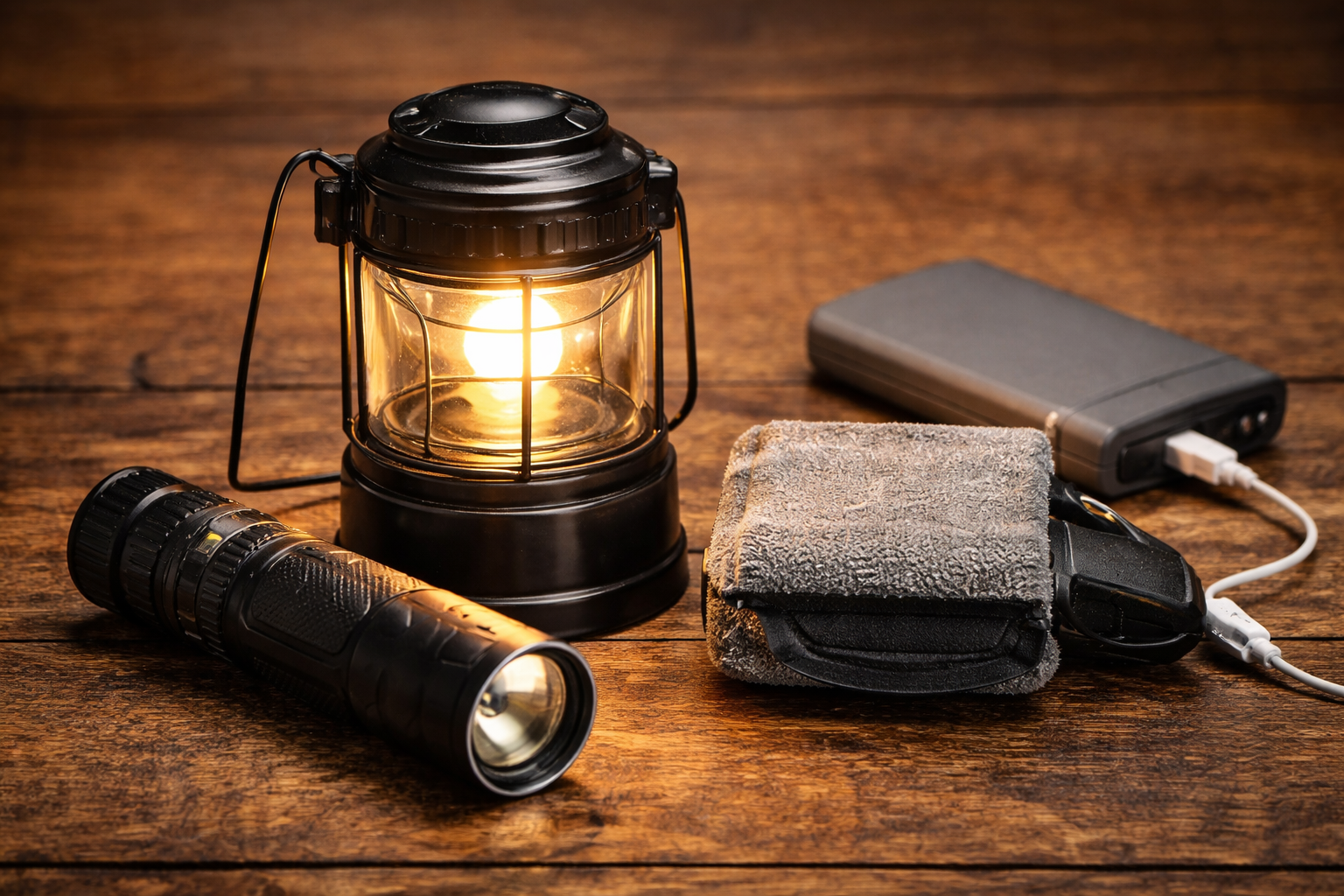
Power outages are extremely common during emergencies.
Your kit should include:
Flashlights
Headlamps
Extra batteries
Battery lanterns
Phone power banks
Reliable lighting helps you safely navigate your home during blackouts.
Recommended options:
Best EDC Flashlights Under $100
First Aid Supplies
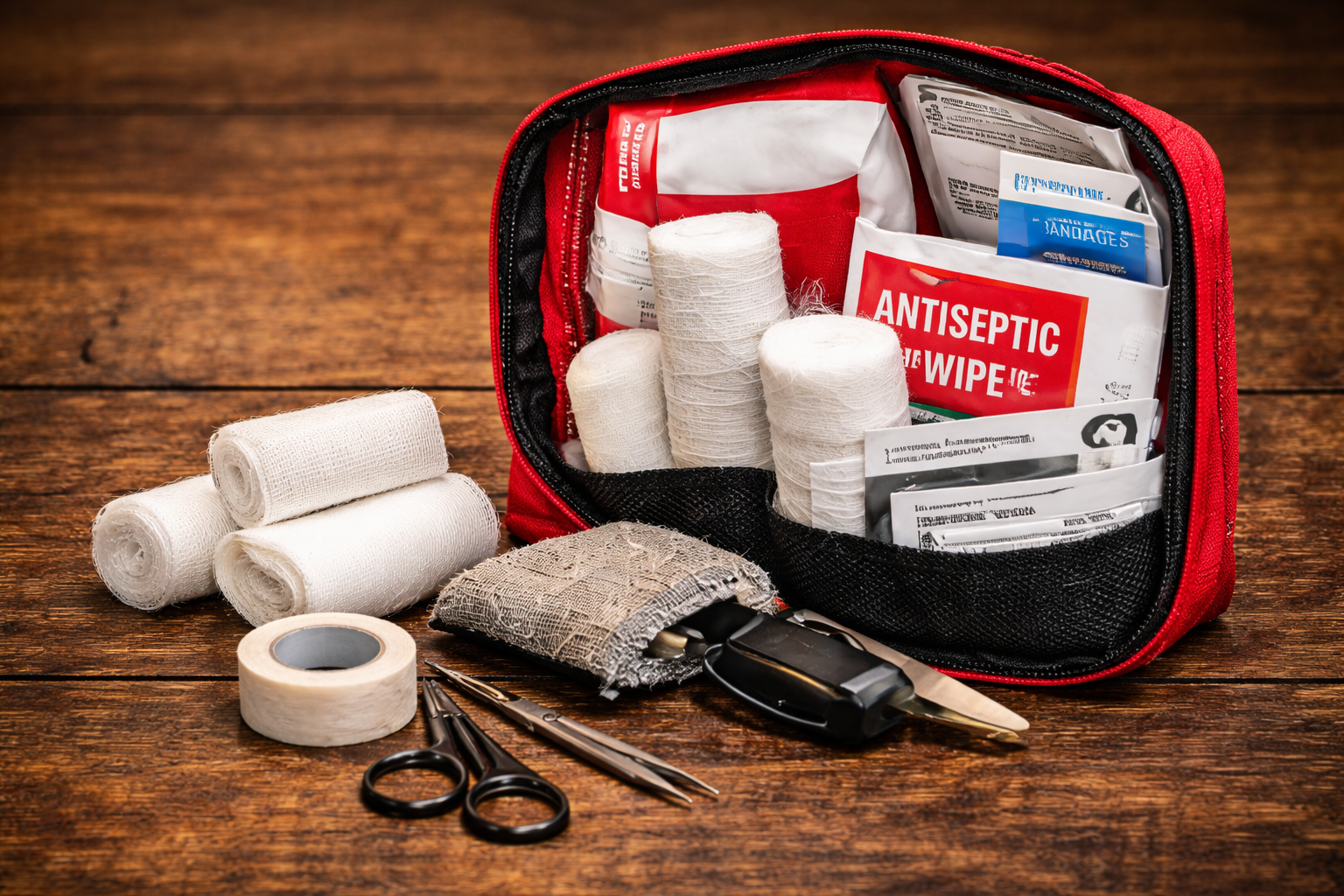
Minor injuries can quickly become serious without proper medical supplies.
Your basic first aid kit should include:
Bandages
Antiseptic wipes
Gauze pads
Medical gloves
Pain relievers
Consider taking basic first aid training so you know how to properly use these supplies.
Recommended options:
Emergency Communication Tools
Communication becomes extremely important during disasters.
Include:
Battery-powered radio
Emergency whistle
Backup phone charger
Printed emergency contact list
These tools help you stay informed and connected when normal systems fail.
Recommended options:
Complete Emergency Preparedness Kits
If you want a ready-made solution, these kits include many of the essentials in one package:
Recommended kits:
Where to Store Your Emergency Kit
Your emergency kit should be stored somewhere easy to access quickly.
Good locations include:
A closet near the front door
Garage storage shelves
Emergency bins in vehicles
A dedicated preparedness cabinet
Many families maintain multiple kits for home, vehicle, and travel.
Final Thoughts: Preparedness Brings Peace of Mind
A beginner emergency preparedness kit doesn’t have to be expensive or complicated.
Even a small collection of supplies can dramatically improve your ability to respond calmly when emergencies happen.
Preparedness is simply about planning ahead.
Because when emergencies happen, the prepared stay calm and take action.
Quick Emergency Kit Checklist
✔ Water (1 gallon per person per day)
✔ Non-perishable food
✔ Flashlights and batteries
✔ First aid kit
✔ Emergency radio
✔ Phone charger / power bank
✔ Emergency contact list