Tactical Gear Checklist: The Essentials for Every Operator
Tactical Gear Checklist: A Practical Guide to Responsible Preparedness
Whether you're building your first everyday carry setup or refining a complete preparedness system, having a structured tactical gear checklist ensures you cover the essentials without wasting money on unnecessary equipment.
Preparedness isn’t about collecting random gear.
It’s about building capability with intention.
A tactical gear checklist helps you avoid impulse purchases and focus on what actually matters — reliability, function, and readiness across key categories.
This guide walks you through a practical framework to evaluate your setup without hype or gimmicks.
Why a Tactical Gear Checklist Matters
Many people start preparing by buying whatever looks impressive.
A tactical backpack.
A flashlight with 15 modes.
A pre-packed kit from a discount site.
But preparedness isn’t about looking ready — it’s about being ready.
A checklist forces you to think in systems:
What problem does this solve?
Does this fit into a broader readiness plan?
Is this dependable under stress?
Preparedness starts with structure.
Want a complete breakdown of preparedness gear?
Start here → Preparedness Gear Guide
Category 1: Everyday Carry (EDC)
This post may contain affiliate links. If you purchase through these links, Freedom Gear Co may earn a small commission at no extra cost to you.
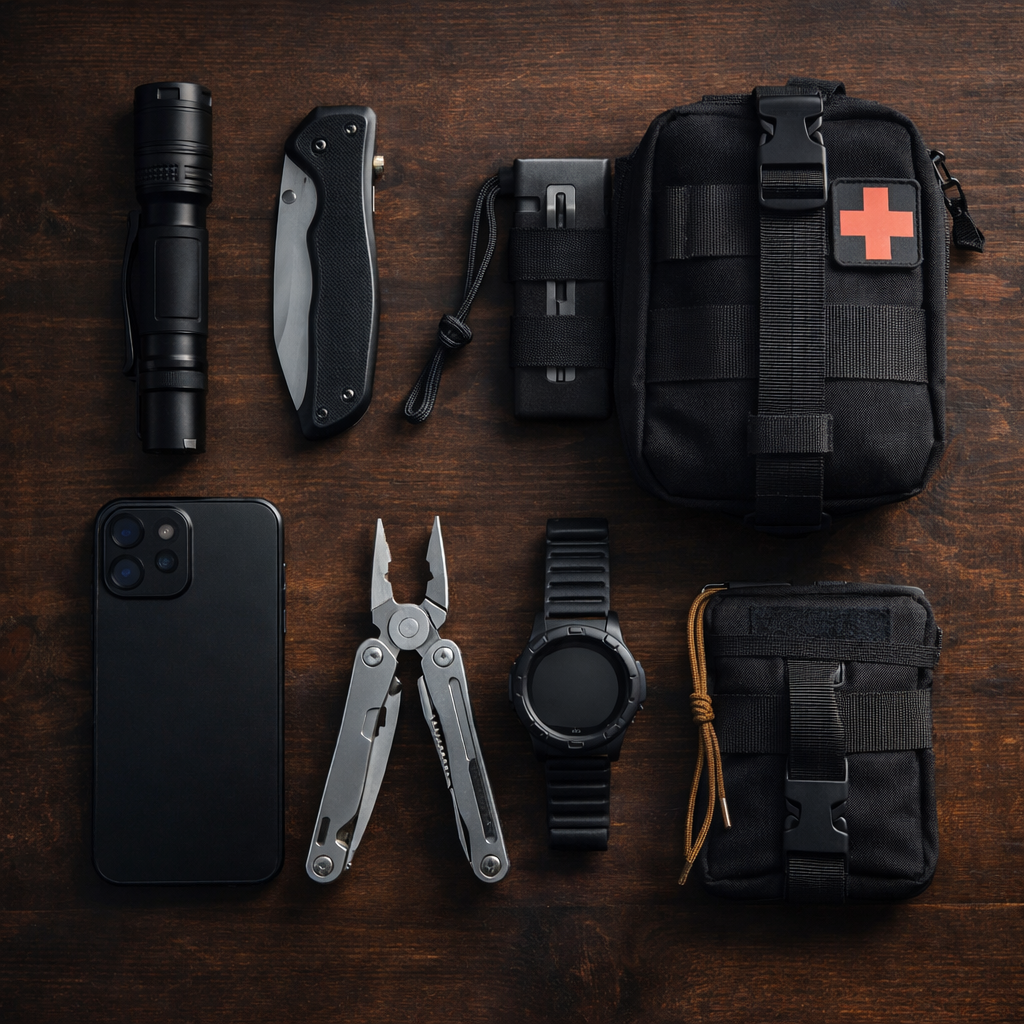
Your everyday carry items are tools you may rely on immediately.
Focus on practicality, not novelty.
Core EDC Checklist:
Reliable flashlight (durable, simple interface)
Quality folding knife or multi-tool
Basic medical component (tourniquet or pressure bandage where legally appropriate)
Communication device (charged phone, optional radio depending on use case)
Secure storage for any defensive tools
The goal of EDC is accessibility and reliability — not excess.
Learn more:
Category 2: Home Readiness
Your home setup should prioritize safety and accessibility.
Home Tactical Checklist:
Secure storage solutions
Backup lighting (lanterns or rechargeable systems)
Fire extinguishers in key areas
Basic trauma kit
Clear household plan for emergencies
Preparedness at home is about responsibility — especially if others depend on you.
Improve your setup:
Category 3: Vehicle Preparedness

Your vehicle is often where emergencies happen unexpectedly.
Vehicle Gear Checklist:
First aid kit
Emergency water supply
Jumper cables or battery pack
Weather blanket
Roadside safety tools
Vehicle gear should be compact, organized, and easy to access.
Full guide:
Category 4: Medical Readiness

Medical preparedness is often overlooked — until it’s needed.
Medical Gear Checklist:
Trauma kit (from a reputable provider)
Basic first aid supplies
CPR knowledge or training
Emergency contact list
Extra medications where applicable
Tools are important.
Training is equally important.
Build your kit:
Category 5: Long-Term Essentials
Preparedness also includes stability beyond immediate response.
Long-Term Checklist:
Minimum three-day water supply per person
Non-perishable food
Manual can opener
Water purification method
Rotation plan for stored items
Long-term preparedness reduces panic and increases confidence.
Learn more:
Common Mistakes to Avoid
A tactical gear checklist also protects you from mistakes:
Buying based on trends
Choosing appearance over durability
Over complicating systems
Ignoring storage and organization
Failing to test equipment
Preparedness is built deliberately, not impulsively.
How to Build Your Setup Over Time
You don’t need everything at once.
Start with:
Everyday carry basics
Home lighting and safety
Vehicle essentials
Medical reliability
Food and water storage
Build gradually.
Test your equipment.
Replace weak links.
Final Thoughts
Tactical gear should serve a purpose.
A checklist keeps your preparation grounded, structured, and responsible.
Preparedness isn’t about fear.
It’s about protecting what matters — calmly and intentionally.
If you’re just getting started, review your current setup and identify gaps before adding new gear.
Prepared for what matters.
— Freedom Gear Co.