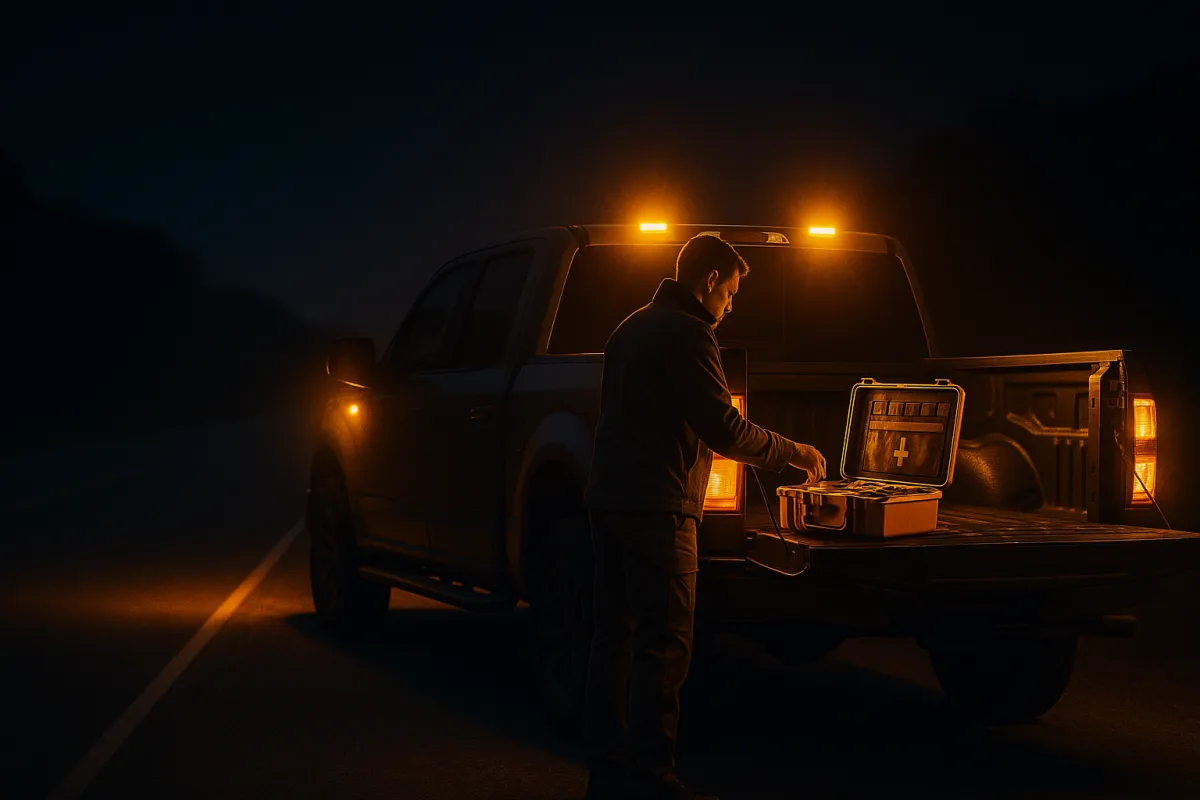
Vehicle Emergency Preparedness: What Most Drivers Forget

Introduction
Most people assume their vehicle will always get them where they need to go.
Until it doesn't.
Breakdowns, accidents, dead batteries, extreme weather, and unexpected road conditions can leave you stranded with little warning.
And when that happens, what you have in your vehicle—and what you know how to do—matters more than anything else.
The problem is this: most drivers are unprepared.
They might have a spare tire and maybe a phone charger, but beyond that, they rely entirely on outside help.
This guide will show you how to build a complete vehicle emergency preparedness system—so you're not dependent, not vulnerable, and not caught off guard.
Why Vehicle Preparedness Matters
Your vehicle is more than transportation. It's:
A mobile base of operations
A first line of survival
A bridge between locations
If your vehicle fails, your situation changes instantly. You may be:
Stuck on the side of the road
Stranded in bad weather
Forced to walk long distances
Preparedness turns a bad situation into a manageable one.
The Biggest Mistake Drivers Make
Most people rely on:
Their phone
Roadside assistance
Other people
Why This Is Dangerous
Phones lose signal
Batteries die
Help may be delayed or unavailable
Preparedness means being able to handle problems on your own first.
Layer 1: Basic Vehicle Essentials

Every vehicle should have a core set of emergency items.
Must-Have Basics
Spare tire (properly inflated)
Jack and lug wrench
Why It Matters
These are your first line of response for flat tires, dead batteries, and minor breakdowns. Surprisingly, many drivers either don't have these—or don't know how to use them.
Layer 2: Emergency Tools and Recovery Gear
Beyond the basics, you need tools that give you options.
Recommended Gear
Real-World Scenarios
Dead battery in a parking lot
Low tire pressure far from a gas station
Getting stuck in mud or sand
These tools turn a helpless situation into a solvable problem.
Layer 3: Lighting and Visibility
Breakdowns rarely happen at convenient times. Many occur at night or in low-visibility conditions.
Essential Items
Why It Matters
You need to see what you're doing, be seen by other drivers, and stay safe while working near traffic.
For reliable options, read: Best EDC Flashlights Under $100
Layer 4: Medical Preparedness

Accidents happen fast—and injuries can happen before help arrives.
Must-Have Medical Items
Why It Matters
You may need to treat your own injuries, help passengers, or assist someone else in an accident before EMS arrives.
Learn More
Layer 5: Water and Food
If you're stranded, hydration becomes a priority quickly.
What to Store
Why It Matters
You may be stuck for hours, overnight, or longer than expected. Dehydration affects decision-making before you even feel thirsty.
For planning, read: Emergency Food and Water Storage: How Much You Really Need
Layer 6: Weather Protection
Exposure is one of the most overlooked dangers when stranded.
Essential Items
Why It Matters
Extreme heat or cold can drain your energy, affect your decision-making, and become life-threatening faster than most people realize.
Layer 7: Navigation and Communication
You cannot rely entirely on your phone.
Backup Options
Why It Matters
If your phone dies or loses signal, you still need a way to navigate, signal for help, and stay oriented. Low-tech backups are non-negotiable.
Layer 8: Self-Defense in Your Vehicle
You are at your most vulnerable when stranded.
Considerations
Situational awareness — know who is approaching your vehicle
Ability to leave quickly — don't box yourself in
Defensive tools — carried legally and practiced regularly
Options
Learn More
Best Pepper Spray for EDC: Top Self-Defense Sprays for Everyday Carry
Concealed Carry EDC Setup: How to Build a Complete CCW Loadout
Layer 9: Get Home Strategy
Your vehicle is not just transportation—it's part of your larger preparedness system. If it becomes unusable, you need a plan.
What That Means
Having a Get Home Bag stored in your vehicle
Knowing alternate routes to your destination
Being prepared to walk if necessary
For a full guide, read: Get Home Bag Essentials: What to Carry to Make It Home Safely (coming soon)
Layer 10: Organization and Accessibility
Having gear isn't enough. You need to be able to find and use it quickly.
Best Practices
Store gear in labeled, waterproof containers
Keep frequently used items in the most accessible location
Avoid clutter — if you can't find it fast, it may as well not exist
Why It Matters
In an emergency, time and clarity matter. A disorganized kit slows you down when seconds count.
Common Mistakes to Avoid
Relying only on your phone
Not carrying enough water
Ignoring medical preparedness
Not maintaining your gear — check it every 6 months
Not knowing how to use your equipment before you need it
How This Fits Into Your Preparedness System
Vehicle preparedness is one layer of a complete system:
Everyday carry (EDC)
Vehicle kit
Get home bag
Home preparedness
Build your full system here:
The Ultimate Everyday Carry (EDC) List: 100+ Essential Items for Prepared Men
How to Build a 72-Hour Emergency Kit: A Complete Beginner Guide
Final Thoughts
Most emergencies don't happen at home. They happen on the road.
Preparedness gives you:
Confidence
Independence
Control
Because when your vehicle fails, your preparation is what takes over.