Best Tourniquet for EDC: Top Picks to Stop Life-Threatening Bleeding
Best Tourniquet for EDC (2026): Top Picks to Stop Life-Threatening Bleeding


A tourniquet is the single most important piece of medical gear you can carry. Extremity bleeding from a car accident, gunshot wound, or traumatic injury can become fatal in under 5 minutes. A tourniquet properly applied in that window saves lives — and it is compact enough to carry every single day.
In the world of everyday carry, most people focus on defensive tools like firearms or knives. But the reality is this:
You are statistically far more likely to need a tourniquet than a gun.
If you are serious about preparedness, a tourniquet is not optional — it is essential.
👉 If you're building a full EDC system, start here:
The Ultimate Everyday Carry (EDC) List: 100+ Essential Items for Prepared Men
This post may contain affiliate links. If you purchase through these links, Freedom Gear Co may earn a small commission at no extra cost to you.
Why Every EDC Carrier Should Carry a Tourniquet


The numbers are not up for debate:
Severe extremity bleeding can kill in 3–5 minutes
Average EMS response time is 7–10 minutes
That gap is where people die from injuries that were completely survivable.
A tourniquet closes that gap.
Combat medicine data has shown that the majority of preventable battlefield deaths were due to uncontrolled bleeding — and could have been stopped with early tourniquet use. The same principle applies to civilian life:
Car accidents
Workplace injuries
Gunshot wounds
Severe lacerations
Expand your preparedness mindset here:
Beginner’s Guide to Preparedness: How to Start Being Ready Today
What Makes a Good EDC Tourniquet?
Not all tourniquets are created equal. This is one area where buying cheap gear can cost lives.
🔹 Proven Effectiveness
Only carry tourniquets that are:
Field tested
Military approved
Backed by real-world use
Look for approval from:
CoTCCC (Committee on Tactical Combat Casualty Care)
🔹 One-Hand Application
You must be able to apply it:
To your own arm
To your own leg
Under stress
If you can’t apply it one-handed, it’s not suitable for EDC.
🔹 Windlass System
A windlass rod:
Allows maximum tightening
Fully stops arterial bleeding
This is the gold standard.
🔹 Time Strap
You need a place to record:
Time of application
This information is critical for emergency responders.
🔹 Width Matters
Minimum:
1.5 inches wide
Narrow tourniquets:
Cause more tissue damage
Are less effective
Your medical gear is part of a larger system:
Essential First Aid Kit Checklist for Prepared Individuals
Best Tourniquets for EDC in 2026
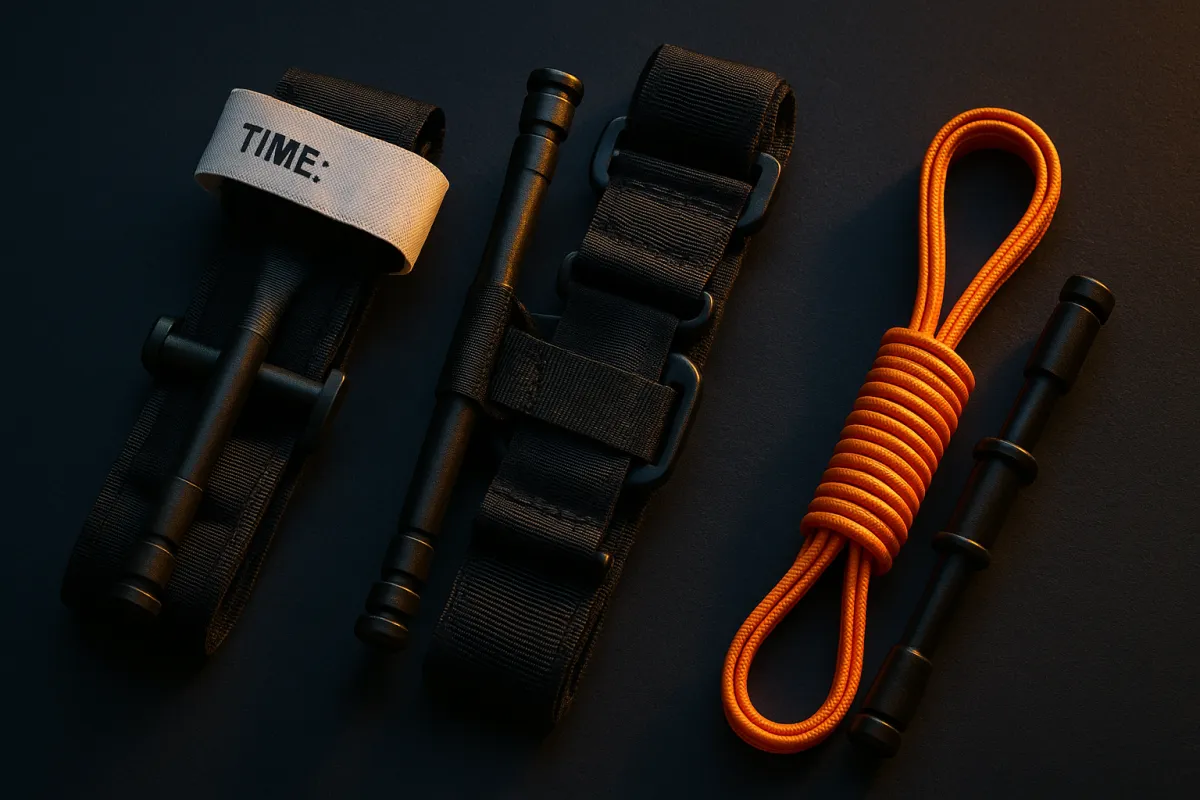
Best Overall: CAT (Combat Application Tourniquet) Gen 7


The CAT Gen 7 is the gold standard in tourniquets.
Used by:
U.S. Military
Law enforcement
First responders
Features:
Self-adhesive band
Windlass rod system
One-hand application
Time strap
Width: 1.5 inches
Approved by: CoTCCC
Why it wins: Proven, reliable, and trusted worldwide.
Important: Only buy from authorized sellers. Counterfeit CAT tourniquets are common and can fail under pressure.
Best for Larger Limbs: SOFTT-W


The SOFTT-W is designed for:
Larger limbs
Heavier clothing
Tactical environments
Features:
Wide pressure band
Metal windlass
Durable construction
Best Compact Option: RATS Tourniquet


The RATS is designed for ultra-compact carry.
Features:
Cleat system (no windlass)
Extremely small footprint
Fits in pocket or pouch
Best use: Backup tourniquet, not primary.
Best for Children: SWAT-T


Standard tourniquets struggle on smaller limbs.
The SWAT-T:
Works on children
Doubles as pressure bandage
Extremely versatile
Where to Carry Your Tourniquet


Placement matters just as much as ownership.
Best carry options:
🔹 Belt-mounted pouch
Fastest access
Preferred method
🔹 Ankle carry
Always on you
Great backup location
🔹 Plate carrier / chest rig
Tactical setups
🔹 EDC bag
Secondary access
Build your full setup:
EDC Gear for Your Vehicle: Essential Tools Every Driver Should Carry
Tourniquet Training (Most People Skip This)
Owning a tourniquet without training is a mistake.
You should be able to:
Apply it in under 30 seconds
Use one hand
Apply under stress
Training Recommendations:
Take a Stop the Bleed class
Practice regularly
Use a dedicated training tourniquet
Pair with trauma gear:
Best IFAK and EDC Trauma Kits of 2026
Common Mistakes That Can Cost Lives
❌ Buying cheap knockoffs
They fail under pressure
❌ Not carrying it on your body
If it’s in your bag, it may not be accessible
❌ No training
Speed and confidence matter
❌ Carrying only one
Consider redundancy
Tourniquet vs Pressure Bandage
Tourniquet → Stops arterial bleeding
Pressure bandage → Slows bleeding
You need BOTH in a complete kit
Build a Complete Medical EDC System
A tourniquet is just the beginning.
Your system should include:
Tourniquet
Pressure bandage
Gauze
Chest seals
Complete your setup:
Frequently Asked Questions
How many tourniquets should I carry?
At least one — ideally two.
Can a tourniquet cause damage?
Yes, but uncontrolled bleeding will kill faster. Use it when necessary.
Where should I place a tourniquet?
High and tight above the wound.
Is the CAT Gen 7 the best option?
Yes — it is the most widely trusted and field-proven.
Can I reuse a tourniquet?
No. Once used in a real scenario, replace it.
Final Thoughts
A tourniquet is the smallest, cheapest piece of gear you can carry that has the highest probability of saving a life.
It bridges the gap between:
Injury
Emergency response
Carry it on your body. Train with it. Replace it when needed.
When seconds matter — this is the tool that keeps people alive.
Stay prepared. Stay ready. Stay free. — Freedom Gear Co