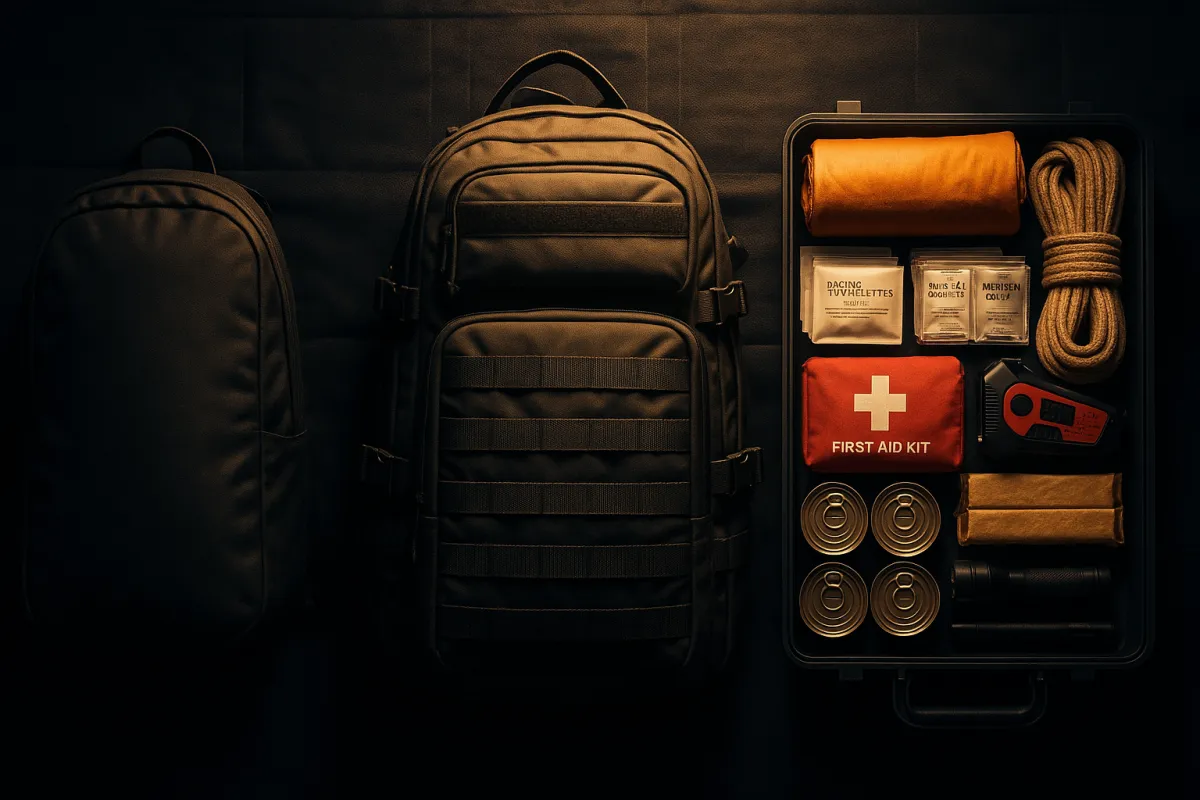
Get Home Bag vs Bug Out Bag vs 72-Hour Kit: What's the Difference?

Introduction
If you've spent any time in the preparedness world, you've probably heard these terms:
Get Home Bag (GHB)
Bug Out Bag (BOB)
72-Hour Kit
They're often used interchangeably—but that's a mistake.
Each one serves a different purpose, and misunderstanding that can leave serious gaps in your preparedness.
This guide breaks down exactly what each system is, when to use it, and how they all fit together into a complete preparedness plan.
Why This Matters
Preparedness isn't about having random gear. It's about having the right tools for the right situation.
If you rely on the wrong system at the wrong time, you may:
Carry too much weight
Lack critical supplies
Be unprepared for the situation you're actually facing
Understanding these differences gives you clarity—and control.
What Is a Get Home Bag (GHB)?

A Get Home Bag is designed to help you travel from your current location back to your home.
Key Purpose
To get you home safely when:
Your vehicle fails
Roads are blocked
Transportation systems are down
Typical Distance
10–50 miles
Core Characteristics
Lightweight
Mobile
Focused on speed and efficiency
What It Includes
When You Use It
Stranded away from home
Vehicle breakdown
Urban emergency
Shop: Get Home Bag backpacks
What Is a Bug Out Bag (BOB)?

A Bug Out Bag is designed to help you survive after leaving your home.
Key Purpose
To sustain you when you must evacuate and cannot return home.
Typical Duration
72 hours or more
Core Characteristics
Larger and heavier than a GHB
Built for survival
More comprehensive
What It Includes
When You Use It
Natural disasters
Evacuation orders
Unsafe living conditions
For a full system, read: How to Pack a Bug Out Bag: The Room-by-Room System
Shop: Bug Out Bag backpacks on Amazon
What Is a 72-Hour Kit?
A 72-hour kit is designed to help you survive for three days in place or during short-term emergencies.
Key Purpose
To sustain you during temporary disruptions.
Core Characteristics
Focused on comfort and sustainability
Can be stored at home or in a vehicle
Not designed for long-distance movement
What It Includes
When You Use It
Power outages
Temporary emergencies
Short-term disruptions
For a full guide, read: How to Build a 72-Hour Emergency Kit: A Complete Beginner Guide
Shop: Pre-built 72-hour kits on Amazon
Key Differences at a Glance
Purpose
Get Home Bag: Get back home
Bug Out Bag: Survive away from home
72-Hour Kit: Sustain yourself temporarily
Mobility
Get Home Bag: Highly mobile
Bug Out Bag: Moderately mobile
72-Hour Kit: Low mobility
Weight
Get Home Bag: Light
Bug Out Bag: Medium to heavy
72-Hour Kit: Can be heavy
Duration
Get Home Bag: 24–72 hours
Bug Out Bag: 72+ hours
72-Hour Kit: 72 hours
Environment
Get Home Bag: Travel-focused
Bug Out Bag: Survival-focused
72-Hour Kit: Stationary or short-term
How They Work Together
These systems are not meant to replace each other. They are meant to work together.
Layered Preparedness System
Everyday Carry (EDC) — What you have on you at all times
Get Home Bag — What gets you home when things go wrong
Bug Out Bag — What helps you leave home when you can't stay
72-Hour Kit — What sustains you through short-term disruptions
Build your foundation here: The Ultimate Everyday Carry (EDC) List: 100+ Essential Items for Prepared Men
Common Mistakes People Make
Mistake #1: Trying to Combine Everything Into One Bag
This leads to excess weight, inefficiency, and poor mobility. Each system should have a clear, singular purpose.
Mistake #2: Overpacking
More gear does not equal more preparedness. It often means slower movement, faster fatigue, and poor decision-making under stress.
Mistake #3: Ignoring Real-World Scenarios
Preparedness must match your environment — urban vs rural, daily commute distance, and local weather conditions all affect which system you need most.
Mistake #4: No Plan
Gear without a plan is useless. You should know when to use each system, where your gear is located, and how to access it quickly.
Choosing the Right System for You
Ask yourself:
How far do I travel daily?
What risks are common in my area?
How quickly could I get home if needed?
Do I have a safe place to go if I leave home?
Your answers determine your priorities — and which system to build first.
Expanding Your Preparedness System
Preparedness doesn't stop with these three systems. You should also consider:
Vehicle preparedness
Home defense planning
Urban survival strategies
Build those layers here:
Final Thoughts
Preparedness is not about having more gear. It's about having the right system for the right situation.
When you understand the difference between a Get Home Bag, Bug Out Bag, and 72-Hour Kit — you stop guessing and start preparing with purpose.
Because when something goes wrong, clarity matters.
And the right system can make all the difference.