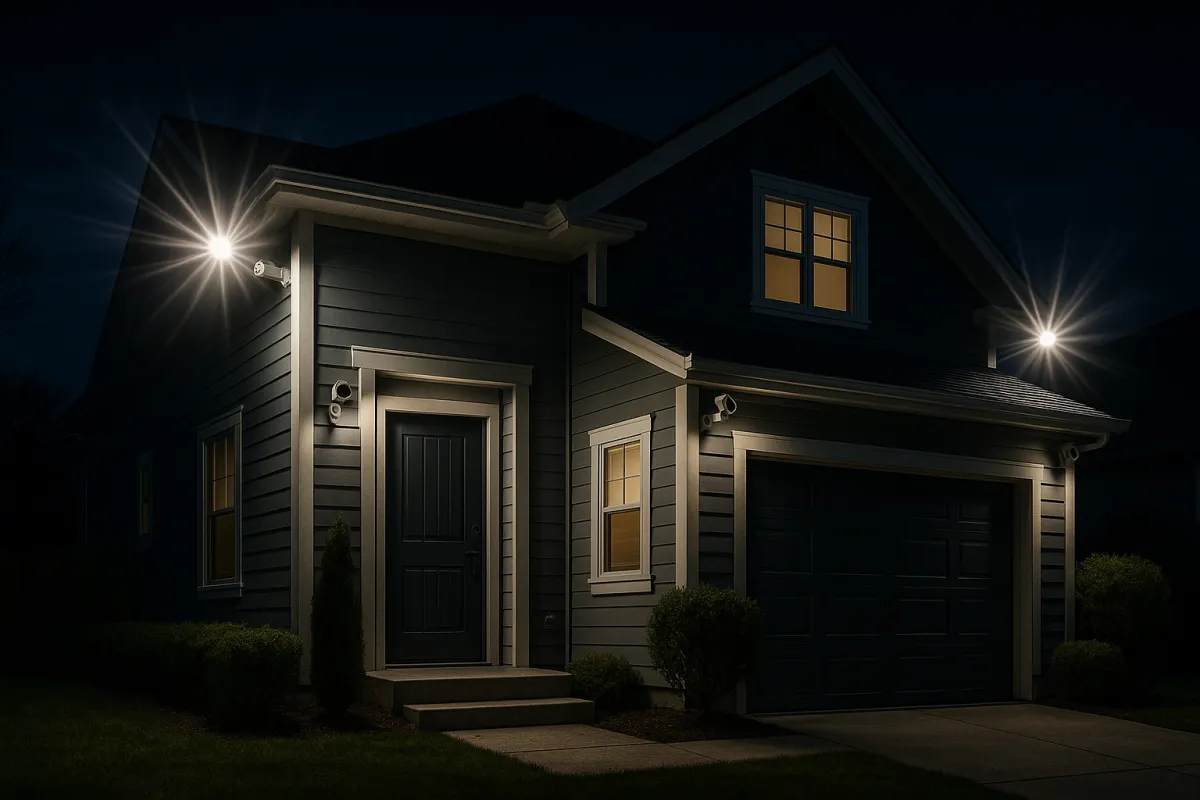
How to Build a Layered Home Defense Plan (Beyond Just a Gun)
Introduction
Most people think home defense starts and ends with owning a firearm.
That mindset leaves dangerous gaps.
A gun is a tool—but without a system behind it, it's reactive, not strategic.
Real home defense is about layers. It's about creating distance, buying time, and controlling situations before they ever reach the point of violence.
Because the truth is this:
The best home defense plan doesn't start when someone kicks in your door. It starts long before that.
In this guide, you'll learn how to build a complete layered home defense system that protects you, your family, and your property—from the outside in.

What Is Layered Home Defense?
Layered home defense is a strategy that uses multiple levels of protection so that no single failure leaves you exposed.
Each layer serves a purpose:
Deter threats
Detect threats
Delay threats
Defend against threats
Think of it like this: If someone can walk straight into your home without being seen, slowed down, or detected, your defense has already failed.
A layered system fixes that.
Layer 1: Awareness and Visibility (Deter Before It Starts)
Most criminals are not looking for a challenge. They are looking for opportunity.
If your home looks difficult to approach, many threats will never begin.
How to Increase Visibility
Keep bushes and trees trimmed away from windows and doors
Eliminate dark areas around entry points
Use visible security cameras or signage
Why This Works
Criminals rely on:
Darkness
Surprise
Easy access
Take those away, and you reduce your risk dramatically.
Layer 2: Physical Barriers (Buy Time)
If someone decides to target your home, your next objective is simple: slow them down.
Time is your most valuable asset in a home defense scenario.

Critical Barrier Upgrades
Solid core or metal exterior doors
Real-World Impact
Most forced entries happen fast—often within seconds. If you can extend that to even 20–60 seconds, you gain time to:
Wake up
Gather your family
Call 911
Access defensive tools
That time can be the difference between control and chaos.
Layer 3: Early Warning Systems (Never Be Surprised)
You should never be caught off guard inside your own home.

Effective Early Warning Options
Monitored security systems
Dogs (highly effective deterrent and alert system)
Why It Matters
An early warning gives you:
Time to think
Time to act
Time to prepare
Without it, you are reacting blindly.
Layer 4: Lighting and Identification Tools
Many people overlook this—but it's critical.
You must be able to identify a threat before you respond to it.
Essential Tools
Weapon-mounted light (if applicable)
Backup light source
Why This Matters
You cannot make a responsible decision if you cannot see clearly. A flashlight allows you to:
Identify threats
Navigate safely
Maintain control in low-light situations
For reliable options, read: Best EDC Flashlights Under $100
Layer 5: Everyday Carry at Home
Most people only think about EDC when they leave the house. That's a mistake.
Emergencies happen at home just as often—if not more.
What You Should Always Have Nearby
Phone
Flashlight
Defensive option
Basic medical access
Build your system here: The Ultimate Everyday Carry (EDC) List: 100+ Essential Items for Prepared Men
Layer 6: Defensive Tools (Last Line of Defense)
If a threat makes it inside your home, this is your final layer.
Firearms
Firearms are highly effective—but they require:
Training
Discipline
Safe storage
Clear decision-making
For options, read: Best Home Defense Shotguns for 2026
Also understand the risks: The Most Dangerous Thing You Do With Your Firearm
Less-Lethal Options
Not every situation requires deadly force.
Options include:
Learn more: Best Pepper Spray for EDC: Top Self-Defense Sprays for Everyday Carry
Layer 7: Medical Readiness (Prepare for the Aftermath)
Most people prepare for the threat—but not the aftermath.
In reality, injuries are one of the most likely outcomes in any emergency.

Must-Have Medical Gear
Pressure bandage
Gloves
Why It Matters
If someone is bleeding heavily, you have minutes—not hours. Being prepared medically means:
You can save a life
You can stabilize a situation
You can act before help arrives
Learn more:
Layer 8: Safe Room Strategy
Every home should have a fallback plan.

What Is a Safe Room?
A secure location where your family can:
Retreat
Lock down
Call for help
What to Include
Reinforced door
Phone or backup communication
Medical supplies
Defensive tools
Why It Matters
In many situations, the safest move is not confrontation—it's containment.
Layer 9: Family Communication and Planning
A plan is only effective if everyone understands it.
Questions You Need to Answer
What happens if someone breaks in at night?
Where does everyone go?
Who calls 911?
What if you're not home?
Practice Matters
Walk through scenarios with your family so responses become automatic.
Because under stress, people don't think—they react.
Layer 10: Extending Defense Beyond the Home
Your home defense plan should not stop at your front door.
You need additional layers for:
Your vehicle
Your daily carry
Emergency evacuation
Build those systems here:
EDC Gear for Your Vehicle: Essential Tools Every Driver Should Carry
How to Build a 72-Hour Emergency Kit: A Complete Beginner Guide
Common Mistakes to Avoid
Relying only on a firearm
Ignoring early warning systems
No lighting or identification tools
No medical preparedness
No plan or communication
Not training with your equipment
Final Thoughts
Home defense is not about fear.
It's about preparation, awareness, and responsibility.
A layered system gives you:
Time to react
Awareness of threats
Control over the situation
Because the goal is not just to defend yourself.
The goal is to prevent, delay, and survive anything that comes your way.