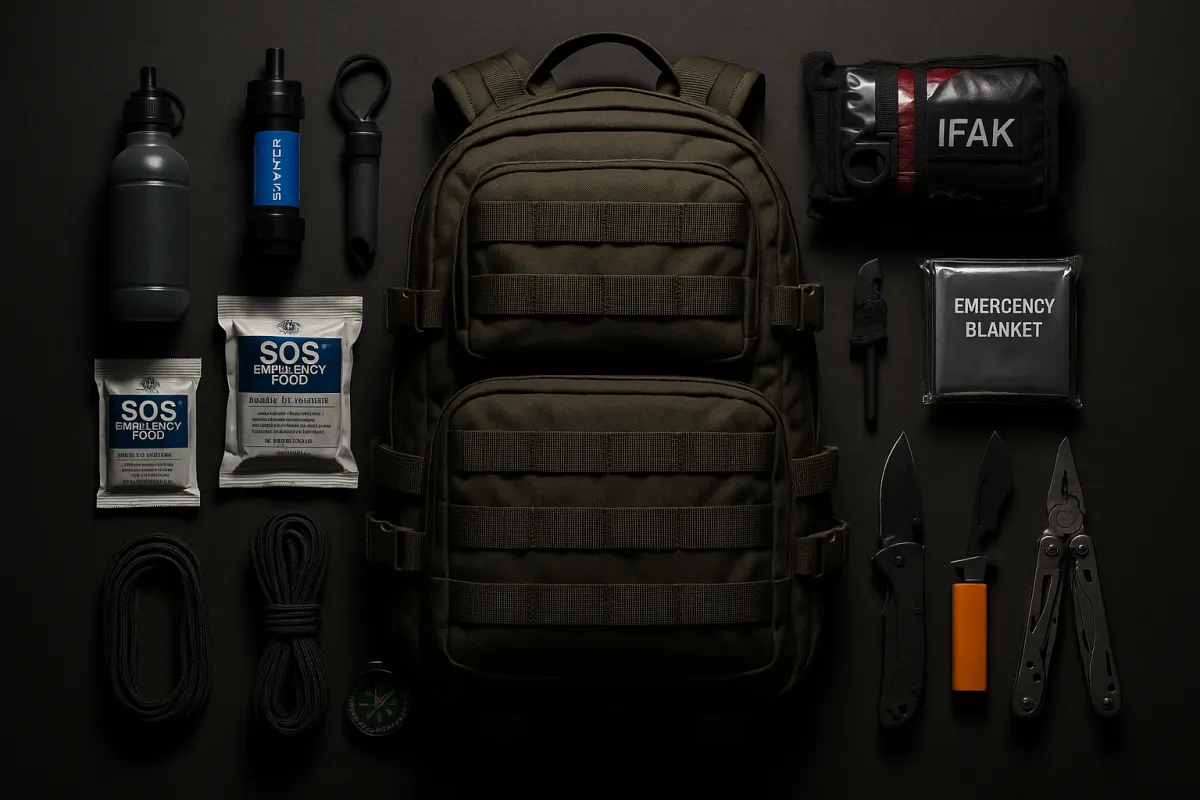
Best Budget Bug Out Bag Setup (Under $200 Complete Guide)
Introduction
Most people think building a bug out bag requires hundreds—if not thousands—of dollars.
That's not true.
You don't need the most expensive gear to be prepared. You need reliable, practical gear that works when it matters.
In this guide, you'll learn how to build a complete bug out bag for under $200—without sacrificing the essentials.

What Is a Bug Out Bag?
A bug out bag (BOB) is a portable kit designed to help you survive for at least 72 hours during an emergency evacuation.
This could include:
Natural disasters
Civil unrest
Power grid failure
Forced evacuation
For a full system, read: How to Pack a Bug Out Bag: The Room-by-Room System
Budget Doesn't Mean Unprepared
Let's get one thing straight:
Cheap gear fails.
Affordable, well-chosen gear works.
The goal is to:
Avoid junk
Prioritize essentials
Spend where it matters most
If you're just starting, read: Beginner's Guide to Preparedness: How to Start Being Ready Today
Budget Breakdown (Under $200)
Here's how we'll allocate your budget:
Backpack: $30–$50
Water & filtration: $20–$30
Food: $20–$30
Medical: $20–$40
Tools & gear: $40–$60
Total: Under $200
Step 1: Backpack (The Foundation)
You don't need a $200 tactical pack.
You need something:
Durable
Comfortable
25–40L capacity
Recommended options:
For more options, read: Best EDC Backpacks for Preparedness
Step 2: Water and Filtration
Water is your top priority.
Without it, nothing else matters.

Minimum setup:
1–2 liters of stored water
Portable filter
Recommended gear:
For deeper planning, read: Emergency Food and Water Storage: How Much You Really Need
Step 3: Food (High-Calorie and Compact)
Your goal is simple: calories and energy.
Recommended options:
Peanut butter packets
Instant oatmeal packets
Lightweight and effective.
Step 4: Medical Kit
This is not optional.
Even on a budget, you need life-saving capability.

Minimum kit:
Tourniquet
Gauze
Gloves
Basic first aid supplies
Recommended gear:
Learn more:
Step 5: Shelter and Warmth
Exposure kills faster than hunger.

Budget-friendly essentials:
Poncho
Tarp
These can:
Keep you dry
Block wind
Help retain body heat
For more ideas: Outdoor Survival Essentials: 10 Critical Tools for Wilderness Preparedness
Step 6: Fire and Light
Fire provides warmth, cooking, and morale.
Light provides awareness and safety.
Recommended gear:
Bic lighter
Compact flashlight
Budget flashlight options: Best EDC Flashlights Under $100
Step 7: Tools and Utility
You don't need a full toolbox—just the essentials.

Recommended gear:
For full options:
Step 8: Self-Defense (Optional but Recommended)
Your safety matters.
Budget-friendly options:
Personal alarm
Learn more:
Best Pepper Spray for EDC: Top Self-Defense Sprays for Everyday Carry
Concealed Carry EDC Setup: How to Build a Complete CCW Loadout
Step 9: Navigation and Communication
You can't rely on your phone.
Recommended gear:
Basic compass
Local map
Whistle
Step 10: Hygiene and Small Essentials
Often overlooked but important.
Include:
Wet wipes
Toothbrush
Trash bags
These improve:
Comfort
Sanitation
Morale
Common Budget Mistakes to Avoid
Buying the cheapest gear available
Ignoring water and medical needs
Overpacking unnecessary items
Skipping testing your gear
How This Fits Into Your Preparedness System
Your bug out bag is just one layer.
You should also have:
Everyday carry (EDC)
Vehicle emergency kit
Home preparedness setup
To build your full system, read:
The Ultimate Everyday Carry (EDC) List: 100+ Essential Items for Prepared Men
EDC Gear for Your Vehicle: Essential Tools Every Driver Should Carry
Final Thoughts
You don't need a huge budget to be prepared.
You need:
The right priorities
The right gear
The discipline to build your system
A $200 bug out bag won't be perfect.
But it could be the difference between being helpless—and being ready.