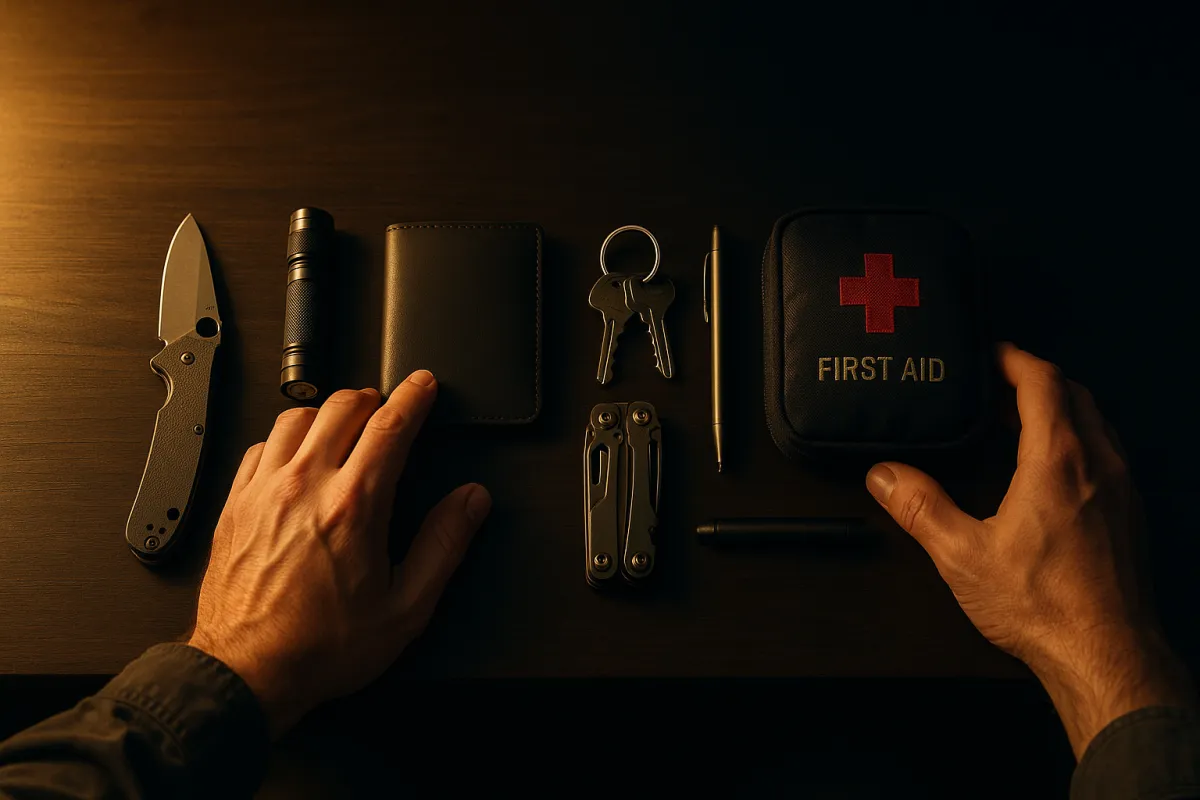
How to Choose the Right EDC Gear for Your Lifestyle (Beginner to Advanced Guide)

Introduction
Most people get into everyday carry (EDC) the wrong way.
They see what others are carrying online and try to copy it.
The problem is this: EDC is not one-size-fits-all.
What works for someone else may be completely wrong for your lifestyle, your environment, and your daily routine.
Choosing the right EDC gear isn't about carrying more. It's about carrying what makes sense—for you.
In this guide, you'll learn how to build an EDC setup that actually fits your life, your needs, and your level of preparedness.
What Is Everyday Carry (EDC)?
Everyday carry refers to the items you keep on you at all times to handle daily tasks and unexpected situations.
This includes tools for:
Utility
Safety
Convenience
Emergency response
Your EDC is your first layer of preparedness.
For a full breakdown, read: The Ultimate Everyday Carry (EDC) List: 100+ Essential Items for Prepared Men
Why Most People Choose the Wrong EDC Gear
Before we build your system, you need to understand where most people go wrong.
Common Mistakes
Copying someone else's setup
Carrying too much gear
Choosing gear based on looks instead of function
Ignoring their actual daily environment
Why This Matters
Bad EDC setups lead to inconvenience, inconsistency, and a lack of preparedness when it matters. A good system solves problems. A bad one creates them.
Step 1: Define Your Daily Environment
Your environment determines your needs.
Ask Yourself
Do I work indoors or outdoors?
Am I in an urban or rural area?
How much time do I spend in my vehicle?
What risks are common in my area?
Why It Matters
Your EDC should match your reality. Someone working in an office has different needs than someone working in construction or traveling daily.
Step 2: Start With the Core EDC Essentials
Every EDC setup should be built around a few core items.
The Foundation
These are the items you will use most often — your daily drivers.
For a simplified setup, read: 10 EDC Items Every Prepared Man Should Carry
Step 3: Add Utility Tools
Once you have your foundation, add tools that solve real problems.
Recommended Tools
Why It Matters
Utility tools allow you to fix problems, adapt to situations, and avoid relying on others.
For High-Quality Options
Step 4: Add Lighting (Non-Negotiable)

If you carry only one tool beyond your phone, it should be a flashlight.
Why It Matters
Most problems happen in low light. A flashlight allows you to identify threats, navigate safely, and work in dark environments.
What to Look For
Compact size — fits in a pocket without bulk
High output — minimum 500 lumens
Reliable battery — rechargeable USB-C preferred
For top options, read: Best EDC Flashlights Under $100
Step 5: Consider Personal Safety
Your safety is your responsibility.
Options to Consider
Legal defensive tools appropriate to your state
Why It Matters
You may not be able to avoid every situation. Having a defensive option gives you confidence, capability, and a last line of protection.
Learn more: Best Pepper Spray for EDC: Top Self-Defense Sprays for Everyday Carry
Step 6: Think About Medical Preparedness
This is one of the most overlooked aspects of EDC.
Minimum Medical Carry
Why It Matters
You are far more likely to need medical gear than anything else you carry.
Learn More
Step 7: Adapt Your EDC to Your Lifestyle
Your EDC should change based on what you're doing.
Workday Carry
Minimal and discreet
Focused on utility
Weekend Carry
More tools
Expanded capability
Travel Carry
Lightweight
Mobility-focused
Why It Matters
Carrying the wrong setup in the wrong situation reduces effectiveness. The best EDC adapts with you.
Step 8: Keep It Comfortable and Consistent
The best EDC setup is the one you actually carry.
What to Avoid
Bulky gear that prints or weighs you down
Heavy pockets that cause fatigue
Uncomfortable setups you'll leave at home
Why It Matters
If your setup is uncomfortable, you won't carry it consistently. And if you don't carry it, it's useless.
Step 9: Build Around Your Vehicle
Your EDC doesn't stop with what's in your pockets. Your vehicle should support your system.
Why It Matters
Your car can carry additional tools, backup gear, and emergency supplies — extending your capability without adding weight to your carry.
Build your vehicle setup here: EDC Gear for Your Vehicle: Essential Tools Every Driver Should Carry
Step 10: Expand Into Full Preparedness
EDC is just the beginning. You should also be building:
Home preparedness
Emergency kits
Long-term systems
Start here:
Common EDC Mistakes to Avoid
Carrying too much gear
Choosing cheap, unreliable tools
Not training with your gear
Ignoring medical preparedness
Not adapting to your environment
How to Progress From Beginner to Advanced

Beginner
Basic tools — knife, flashlight, wallet, keys
Minimal setup — carry what you'll actually use
Focus on consistency — carry every day, no exceptions
Intermediate
Add medical gear — tourniquet and gloves at minimum
Upgrade quality — invest in tools that last
Improve organization — use a system, not random pockets
Advanced
Fully customized system — built for your specific life and risks
Situation-based carry — adapt your loadout to the environment
Integrated preparedness — EDC connects to vehicle, home, and emergency systems
Final Thoughts
Choosing the right EDC gear is not about copying someone else. It's about building a system that fits your life.
A good EDC setup gives you:
Confidence
Capability
Control
Because when something goes wrong, you won't have time to think.
You'll rely on what you carry.